

Employers
Employers of global workforces are increasingly recognising the strategic benefit of proactive support for international dual careers.
Information for
global mobility professionals
Global mobility assignments are too often refused or cut short because accompanying family members are not authorised to work in the host country. Driven out of a passion and dedication to make a change, our sponsor network was formed in 2001 and has grown to over 40 internationally-facing companies and organisations. These employers understand that today’s highly-skilled employee is likely to have a highly-skilled spouse/partner whose employment opportunities in the host country need to be considered. They want to do more for their workforce, provide better opportunities for employees with families, and improve overall assignment experience.
For
44%
of global mobility professionalssupporting dual careers is becoming increasingly important in their organisation.67%
of employers say partners of international assignees should be allowed to work in the host country. Over
42%
of organisationshave seen an assignment turned down in destinations with no partner work authorisation.Where employers give their support to our initiative, our chances of success increase. Where we make progress, employers find it easier to retain an employee with enhanced leadership qualities and cultural awareness. Transfer of skills and knowledge is facilitated. In supporting our aims, employers gain a positive reputation and can demonstrate alignment with company values, including efforts to improve employee experience and inclusion.


Reducing costs through partner support
When work access for accompanying partners is assured, employers find that posts abroad are more readily accepted and that employees are more likely to stay for the duration. This safeguards against the huge knock-on costs of a failed assignment, estimated at up to $1.25 million. And as there’s no need to apply for a separate work permit, the local employer offering a job to a partner doesn’t have extra uncertainty, admin and costs either.


Pre-move conversations
Is partner work access an issue that will impact your organisation? The answer is almost certainly yes. Dual-career couples decide together whether or not to accept an international assignment, and once in the host country they decide together whether or not to cut that assignment short. Yet Permits Foundation has found that in 80% of cases, partners lack the opportunity to communicate their employment and career concerns with the international employee’s company or organisation.
We recommend that family members are included in pre-move conversations. Employers can refer families to our interactive World Map to help manage expectations about whether or not the accompanying family member will have any work access in the host country.

Including all employees
Sometimes employees decline relocation because their partner is not recognised as a dependant in the destination country, for example, if the employee is in a same-sex partnership or marriage. In our latest survey, employers told us that they would welcome a broader definition of family member, extending it to include non-married couples, same-sex partners and children who become old enough to work during the assignment. Particularly for younger families, a dual income may be needed given the high cost of living. We include this information in our recommendations to governments.

A collaborative approach
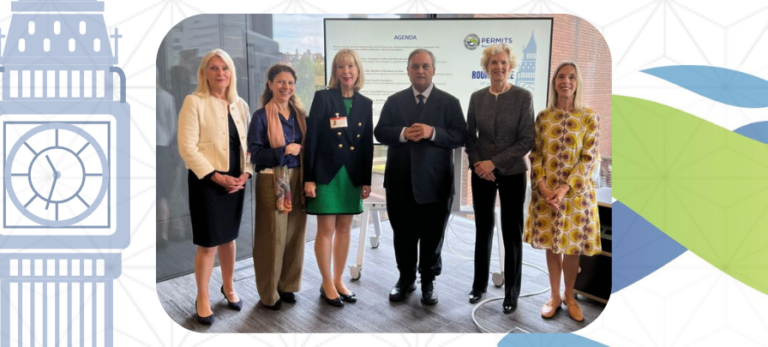
Progress requires partnership. In carrying out our work, Permits Foundation presents an international corporate perspective on partner work access. We also engage with a range of stakeholders including business groups, law associations and chambers of commerce. The Foundation provides a vehicle for like-minded organisations who want to work with us to drive progress. We encourage collaboration and provide opportunities for idea sharing at our roundtables and conferences, via joint media projects and through our surveys.


We support the Permits Foundation and believe their approach results in a win-win for families, employers and host countries.
Roberto Suárez Santos
Secretary-General - International Organisation of Employers (IOE)
Permits Foundation’s advocacy work continues to play an important role in our partner support programmes and therefore in our talent development. Especially as increasingly more dual career couples aspire to pursue their careers together.
Christelle Labbé
Head of HR, United Kingdom - SLB
At AkzoNobel, we recognize the vital role partners and families play in the success of every assignment, and we’re proud to support initiatives that ease their journey.
Jaqueline Barbosa
Senior Global Mobility Officer - AkzoNobel
Get involved
We recognise that employers want to help their employee families; in our survey, 65% of responding global mobility professionals felt that their organisations should do more to support dual careers. Permits Foundation can help. So much can be achieved when many organisations work together. Get in touch with us and find out more about the benefits of collaboration.
For general enquiries