

Governments
Governments worldwide are adopting policies to allow direct employment access for accompanying spouses and partners of highly-skilled foreign workers.
The case for change
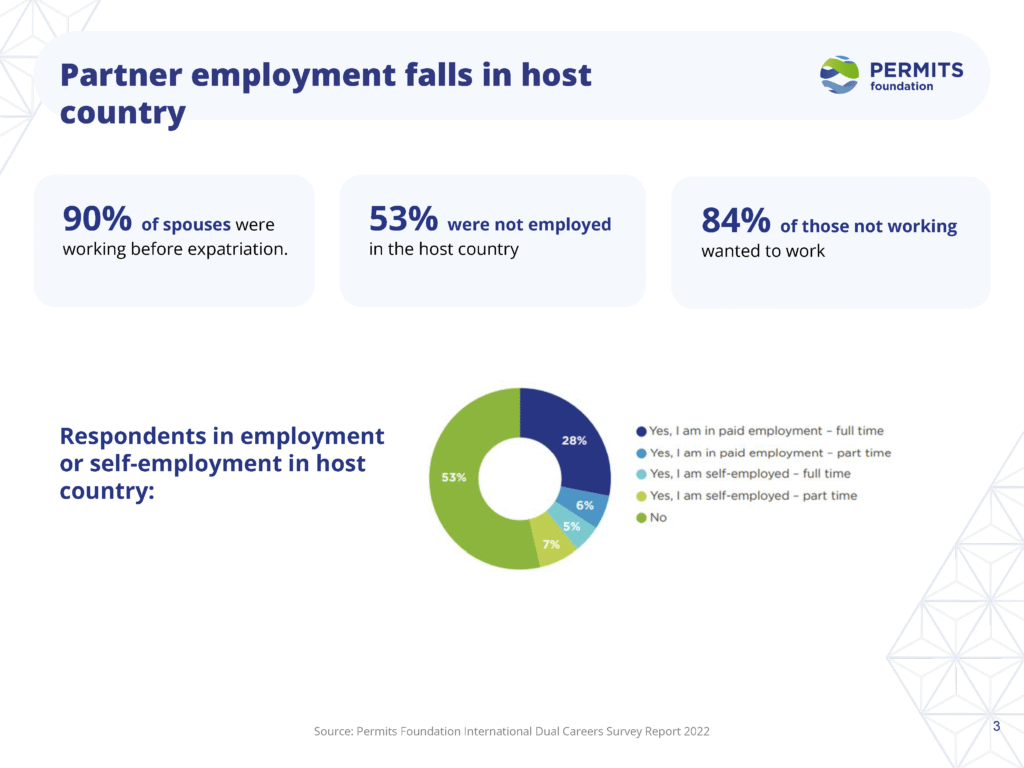
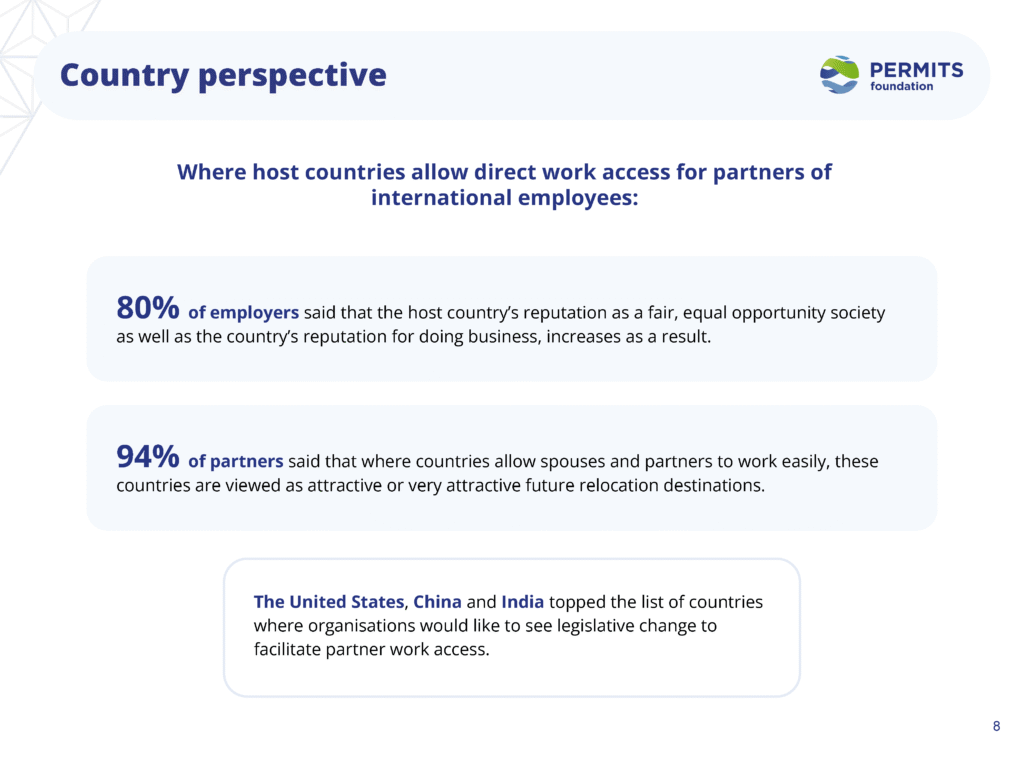
In more than 40 countries worldwide, accompanying family members of highly-skilled foreign workers are permitted to work directly upon recognition of their dependant status. As a result, international companies are able to move talent more easily. This in turn facilitates transfer of knowledge and skills, improving the environment for foreign direct investment. Where spouses and partners have access to work, integration is improved and countries are seen as more attractive business destinations.
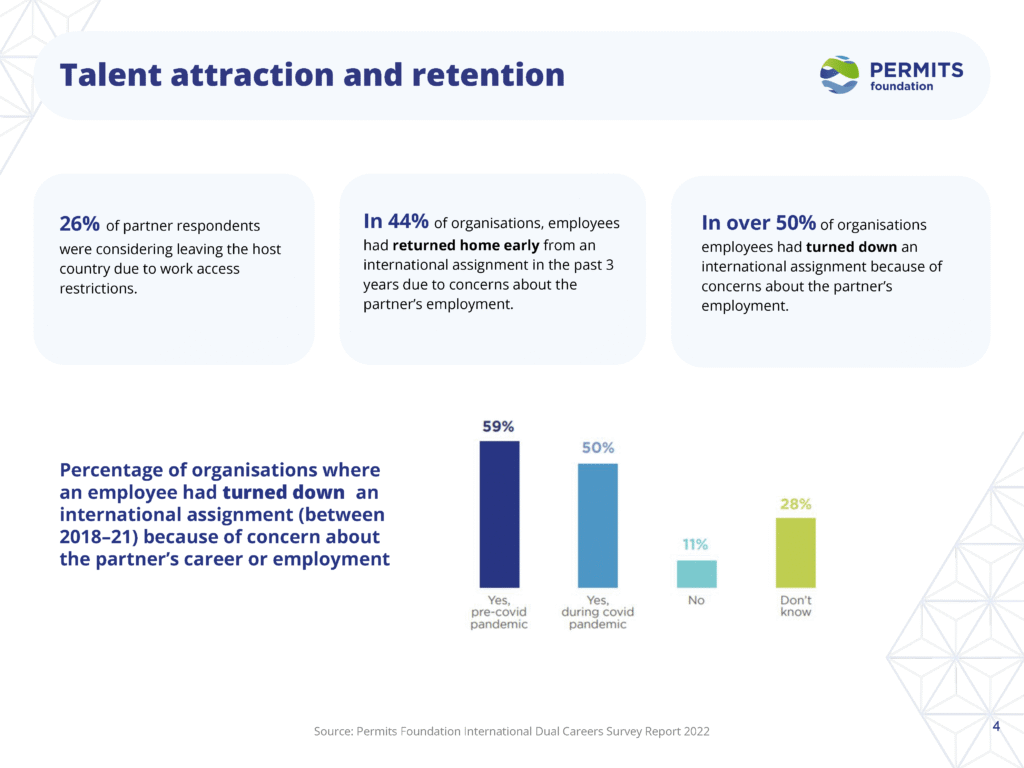
Our latest employer survey shows that where a host country allows partner work access:
60%
of respondentsreported an increased ability to attract people with desired qualifications and skills. 47%
of respondentsexperienced increased employee willingness to accept an assignment in the host country.53%
of respondentssaid that the country’s reputation for doing business increased.Permits Foundation welcomes dialogue with government representatives and policy strategists. We make recommendations that work for employers, employees, families and host countries. As a not-for-profit initiative, we are happy to provide data from our global surveys of employers and partners, as well as extensive examples of country legislation in this field.




Broad base of support
for the Foundation’s work
Permits Foundation enjoys a broad base of support from international employers (public & private) and service providers, from diverse sectors and with global operations. As a not-for profit organisation we carry out our engagement in countries around the world, at the EU and at the UN GFMD.
View our sponsors here.
Over 40 international companies and organisations
in over
150
countries and territoriesover
5.1million
employees
Evidence-based insights
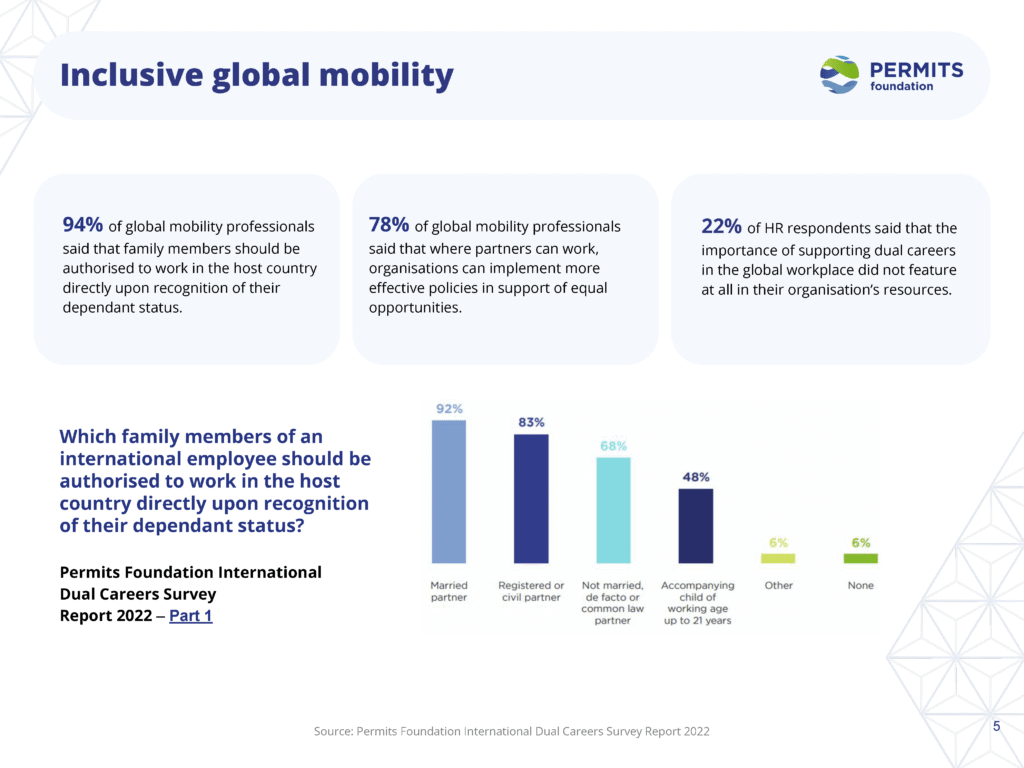
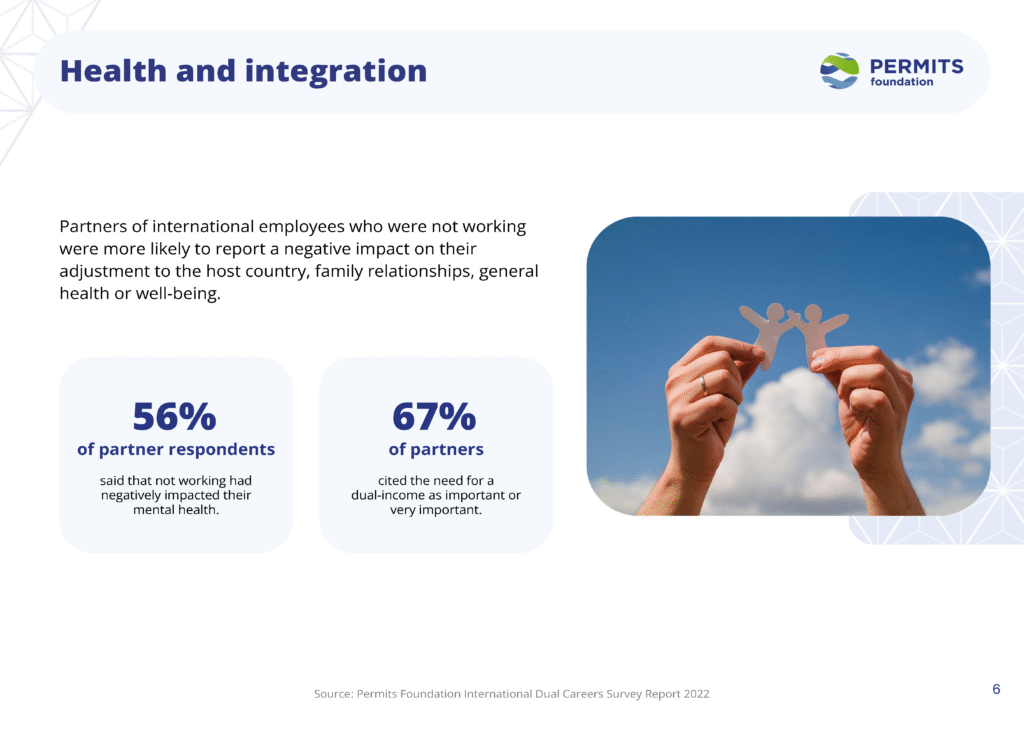
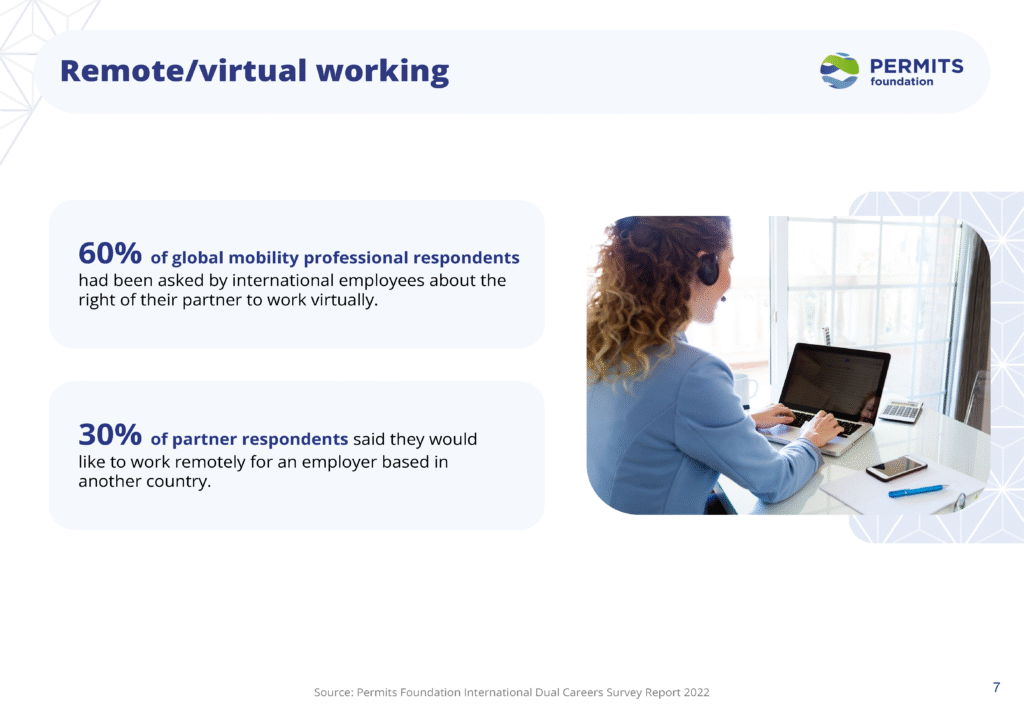
To help inform public debate, we provide policy solutions that are based on our research and with a wide body of stakeholder support. This includes data from our World Map and from our global surveys of international employers and partners. Permits Foundation’s research overwhelmingly shows that where partners are authorised to work, countries and employers alike find it much easier to move, attract and retain skills and talent.
Elements of best practice in government policy that make the difference
Permits Foundation’s interactive World Map contains useful information about country policies and regulations, we welcome your input. Where there is at least one piece of legislation in a country that enables direct employment access for partners and spouses of highly-skilled mobile employees, the Foundation views that country as good practice and that country turns green on our World Map. We classify ‘direct’ access as being linked to dependant status, for any employer and without extra barriers to employment such as lengthy waiting times, procedures or permissions.

Direct work access
where possible, inclusive of self-employment

Broad definition of family
where possible, inclusive of married and non-married partners (opposite- and same-sex) plus access for accompanying children of working age

Quick and easy visa processing
without unnecessary or complex paperwork or procedures

Keeping families together
processing visas at same time as principal, or within three months if submitted separately

Spouse/partner work authorisation clearly communicated
both in the letter of the law and via the government’s website


Labour market impact
Governments worldwide are balancing policies to ensure protection of the local labour market while addressing future skills needs. The global picture shows that where accompanying spouses/partners of international employees in highly-skilled categories have been afforded work access the local labour market was not adversely affected. This is because this cohort is typically small in numbers and highly qualified.
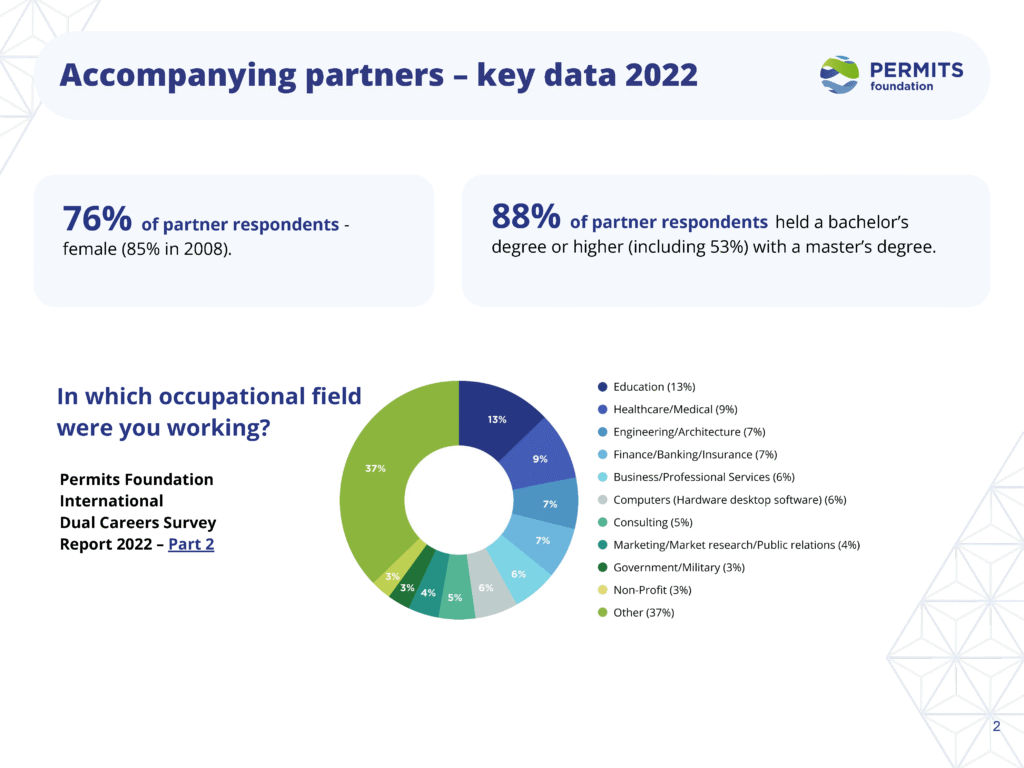
Over 80% of accompanying spouses/partners hold either a bachelor’s, master’s degree or PhD, often with needed skills that are transferable. Authorising direct employment access simply allows dependants to have the opportunity to look for work. There is no job guarantee. Yet if employed, they can make fiscal and skills contributions to the economy. Family integration and well-being is improved.

The changes we are announcing… ensure that Ireland attracts those skilled workers who might not otherwise come to Ireland if their spouse or partner cannot work.
Peter Burke TD
Minister for Enterprise, Trade and Employment - Government of Ireland
Our government is going to continue helping employers overcome labour shortages, while also supporting the well-being of workers and uniting their families.
The Honourable Sean Fraser
Minister of Immigration, Refugees and Citizenship - Government of Canada
I want a system that creates opportunities for people to come here and make a meaningful contribution, but also protects New Zealanders’ rights to work and thrive.
The Honourable Erica Stanford
Minister of Immigration - Government of New Zealand
We are here to help
As a not-for-profit initiative, we are a resource for government representatives who would like more information on the benefits of adopting a policy to better enable partner work access. Please contact us for more information.
For general enquiries